

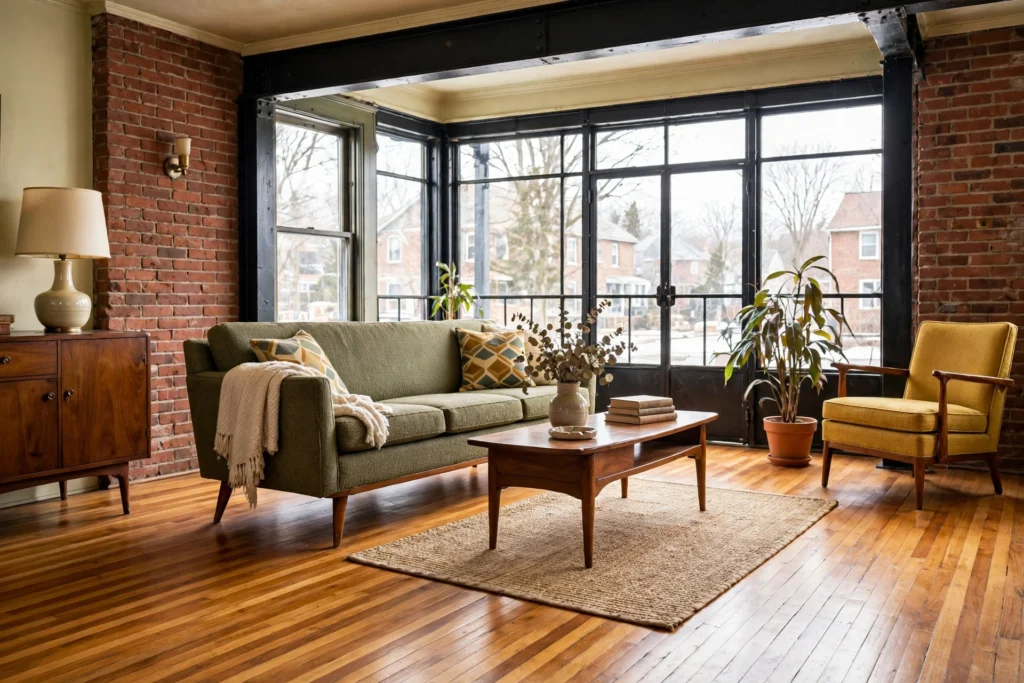
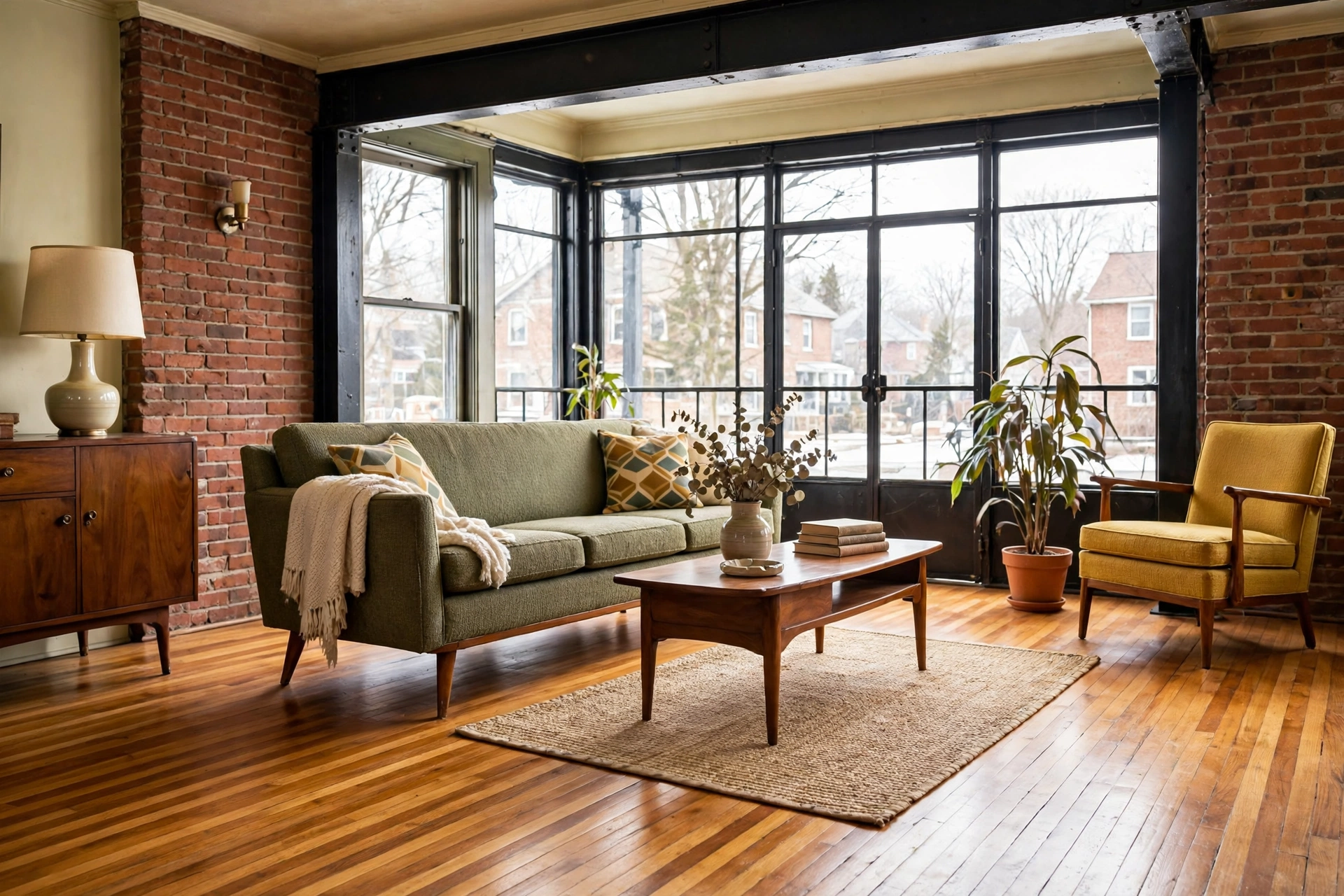
Across Sault Ste. Marie, Ontario, a whole generation of homes was built for a growing steel town in the 1950s and 60s — solid bungalows and two-storeys in Steelton and the West End, family homes in the East End and Eastside, and the neat streets of Grandview Gardens, Meadow Park, the P-Patch, Fort Creek and the Grand Boulevard area. Many were finished the same way: real hardwood in the living room, hallway and bedrooms, later covered with wall-to-wall carpet when carpet became the fashion.
That carpet is now at the end of its life in a lot of those houses, and homeowners are asking the same question: what is actually under it, and can it be brought back? Often the answer is yes — the wood that went down in that era was good material. But not always, and not everywhere in the room. This guide explains how to check what you have, how to judge stains and damage honestly, and when refinishing works, when patching in new boards is the right repair, and when replacement is the straighter answer.
Why so many Sault homes of this era have hardwood under carpet
In the post-war decades, hardwood was a standard finish, not a luxury extra. Builders in steel-town subdivisions laid narrow strip hardwood — commonly oak, and in some homes maple or birch — in the main living areas. Kitchens and bathrooms usually got other materials, but the living room, hall and bedrooms were very often wood.
When broadloom carpet came into style in the 1960s and 70s, it usually went straight over the top. That was not all bad news: carpet protected the wood underneath from decades of sun and wear. That is why so many of these floors come back far better than expected once the old finish is sanded off. The wood was hidden, not worn out.
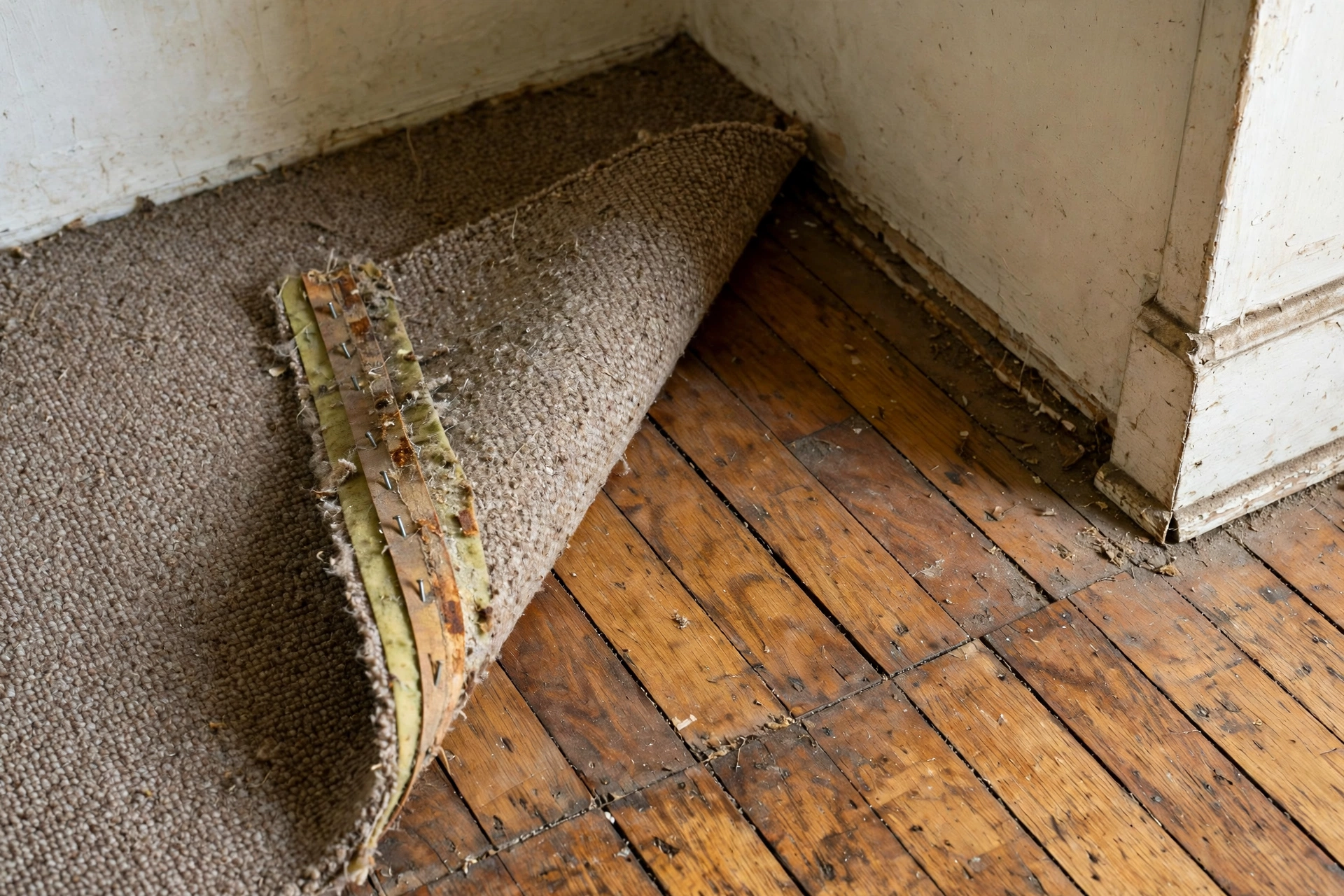
How to check what’s under your carpet
You do not need to rip up a whole room to get the first answer. Check in places that are easy to hide again if you change your mind.
- A closet corner. Closets almost always have the same flooring as the room, and a small lifted corner there will not show. Ease the carpet and underlay back, and look at whether the surface is wood all the way across or a patch of plywood.
- A floor register or heating vent. Lift a register cover and look at the edge of the flooring around the opening. You can often see the thickness of the wood, which matters: a solid board with good thickness above its grooves can usually be sanded; a very thin board may not have a sanding left in it.
- A doorway threshold. Where carpet meets another room, you can sometimes see the layers in cross-section — carpet, underlay, and what is under them.
You are checking: is it wood, how wide are the boards, how thick do they look, and what condition is the surface in? Take photos in a few spots, including the worst area you can find. One clean closet corner does not guarantee the middle of the living room, where a pet, a plant stand or a past leak may have done real damage.
What floors of this era usually look like
Most original floors here are narrow boards — narrower than the wide planks sold today — laid in long strips. The narrow width is part of their character, and practical too: narrower boards show seasonal movement less, which helps where Lake Superior winters mean months of dry heated air, boards that shrink and gap slightly, then settle again in summer. Expect the old finish to look tired — yellowed or dull — even when the wood itself is sound; that is the finish aging, not the board failing, and sanding removes it.
Sorting the good news from the real problems
Wear, scratches and a dull finish
This is the easy category, and the most common. Surface wear, light scratches and a finish that has gone flat are exactly what refinishing is for. The process described on our hardwood floor refinishing page — sanding back to clean wood, staining if you want a colour change, then new finish coats — deals with all of it.
Pet stains and dark marks
Dark spots, especially in corners, by doors and in favourite pet spots, are the main worry in these homes. A dark stain often means moisture sat in the wood a long time, and it can go deeper than the surface. Some lighten a great deal with sanding; some do not come out fully, because the discolouration is through the board, not on it.
The honest options: live with a softened mark in a low-traffic corner, use a darker stain colour for the whole floor so marks blend in, or patch in new boards for the worst section and refinish the room as one surface. Anyone who promises every black pet stain will sand out completely, sight unseen, is guessing. The real answer comes from test-sanding the worst spot.
Water damage
Watch for boards that are cupped, soft, split or darkened near doors, radiators, bathrooms and below windows — and, in homes closer to the St. Marys River, anywhere past damp has reached the floor. A small area can often be cut out and patched. Widespread softness or a damaged subfloor is a different job: fix the water source first and rebuild that section. Refinishing over active moisture does not hold.
When refinishing works — and when it doesn’t
Refinishing is usually the right call when the boards are solid wood with enough thickness left to sand, most of the surface is sound, and damage is limited to finish wear, light staining, or small areas that can be patched. You keep an original floor, in the boards the house was built with, for a job generally less involved than full replacement. As orientation only, published Canadian cost guides generally place refinishing below new hardwood installation per square foot — treat any range as background, not a quote, because patching and board condition move the real price.
Replacement is the honest answer when boards are too thin to sand again, damage covers a large share of the room, or the floor has been patched so often it no longer reads as one surface. In that case our hardwood flooring page sets out new solid and engineered options.
There is also a middle path: refinish the rooms where the original wood is good — often the bedrooms and hall — and put a new floor where it is not. For family homes and rental turnovers in the East End and Meadow Park, a practical alternative in a worn room is modern laminate flooring, which handles everyday wear well alongside refinished wood in the rest of the house. Bathrooms and the wettest entries are a separate conversation, where tile installation is usually the more suitable surface.
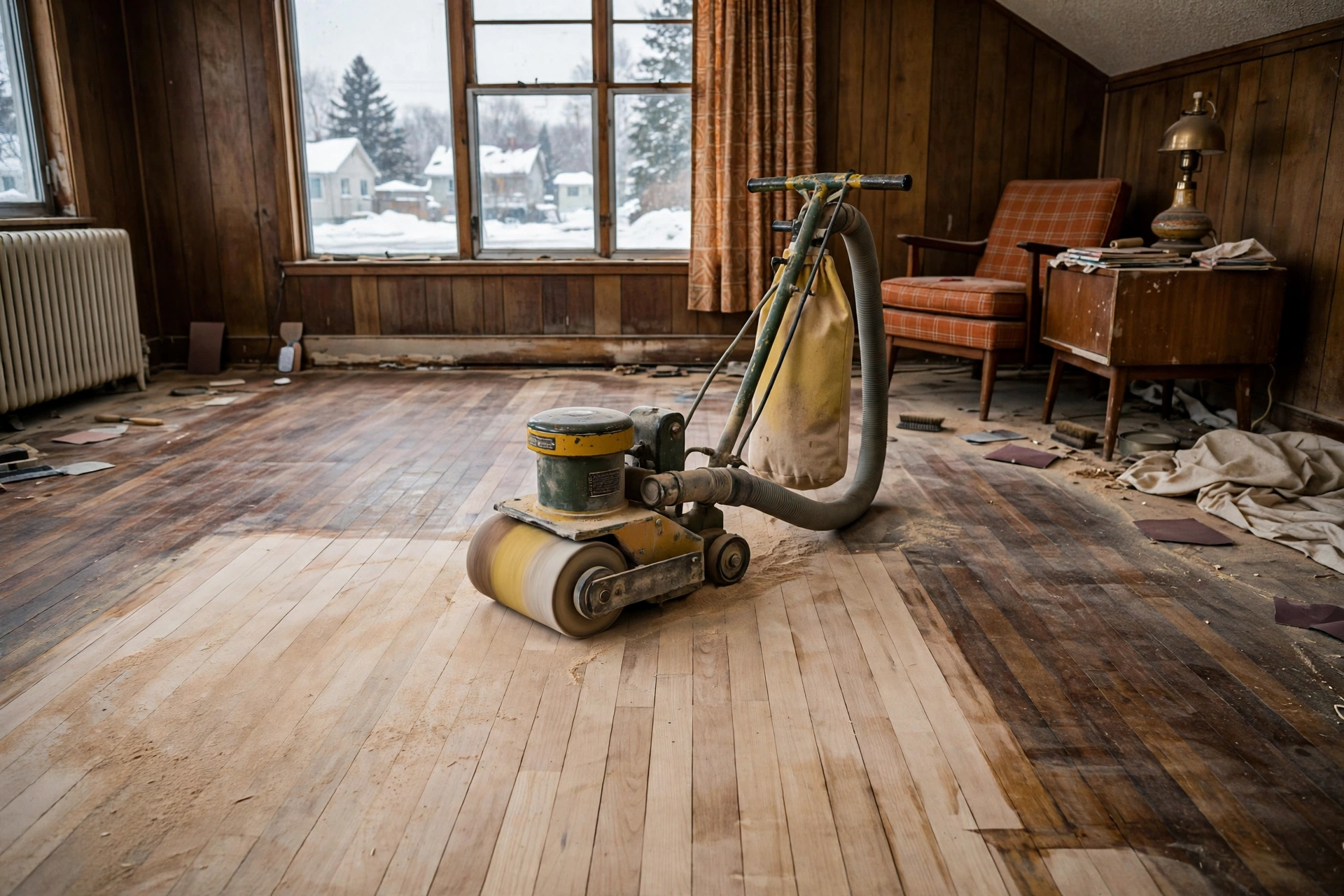
What the refinishing job involves
In plain terms: carpet, underlay, staples and tack strips are removed first — staple removal in old hardwood is slow, careful work. Damaged boards are patched next, so everything is sanded as one floor. The floor is sanded in stages back to clean wood, a test area for stain colour is approved before the whole room is committed, and finish coats are applied with drying time between them.
Plan on the room being out of use during the work and for a period after the final coat, with furniture out until the finish has hardened. Homes near the river can run humid in summer, which can affect drying, so scheduling and ventilation are part of a good job here.
A note on costs
There is no responsible single price for bringing back an original floor, because the job is defined by what is under your carpet — how much patching is needed and whether stains sand out. Treat any range in published Canadian guides as orientation only, not a quote. A photo of the worst area, plus the thickness check at a register, will get you a straighter first answer.
Thinking about lifting the carpet?
If you are in Steelton, the West End, the East End or Eastside, Grandview Gardens, Meadow Park, the P-Patch, Fort Creek, the Grand Boulevard area, or Churchill Heights and Northern Heights, there is a good chance your home is hiding its original floor. We serve Sault Ste. Marie from Sault Ste. Marie, ON, P6A 5X6 — across the river in Michigan is a different city and country, and not an area we cover.
Start with a closet corner or a register, take photos of the best and worst spots, and call us at 249-700-4998 or get a free quote through our contact page. We will give you a straight answer on whether yours is a refinishing job, a patch-and-refinish job, or a replacement.
FAQ
How can I tell if the hardwood is thick enough to refinish?
Lift a floor register and look at the edge of a board. Solid boards with a clear thickness of wood above the groove usually have room for sanding. Very thin boards, or floors sanded many times before, may not — that edge check is the fastest first answer.
Will dark pet stains sand out?
Some do, and some only lighten. A stain that sat for years can run through the board, not just sit on the surface. Test-sanding the worst spot gives the real answer; the fallbacks are a darker stain colour to blend marks in, or patching in new boards for that section.
Is it worth refinishing narrow boards, or should I just get wide planks?
That is a matter of taste, and both are legitimate. Narrow original boards suit these homes, show seasonal movement less in a dry Sault winter, and keep the character the house was built with. If you prefer a wide-plank look, that is a replacement job, not a refinishing one — decide which look you want before any carpet comes up.