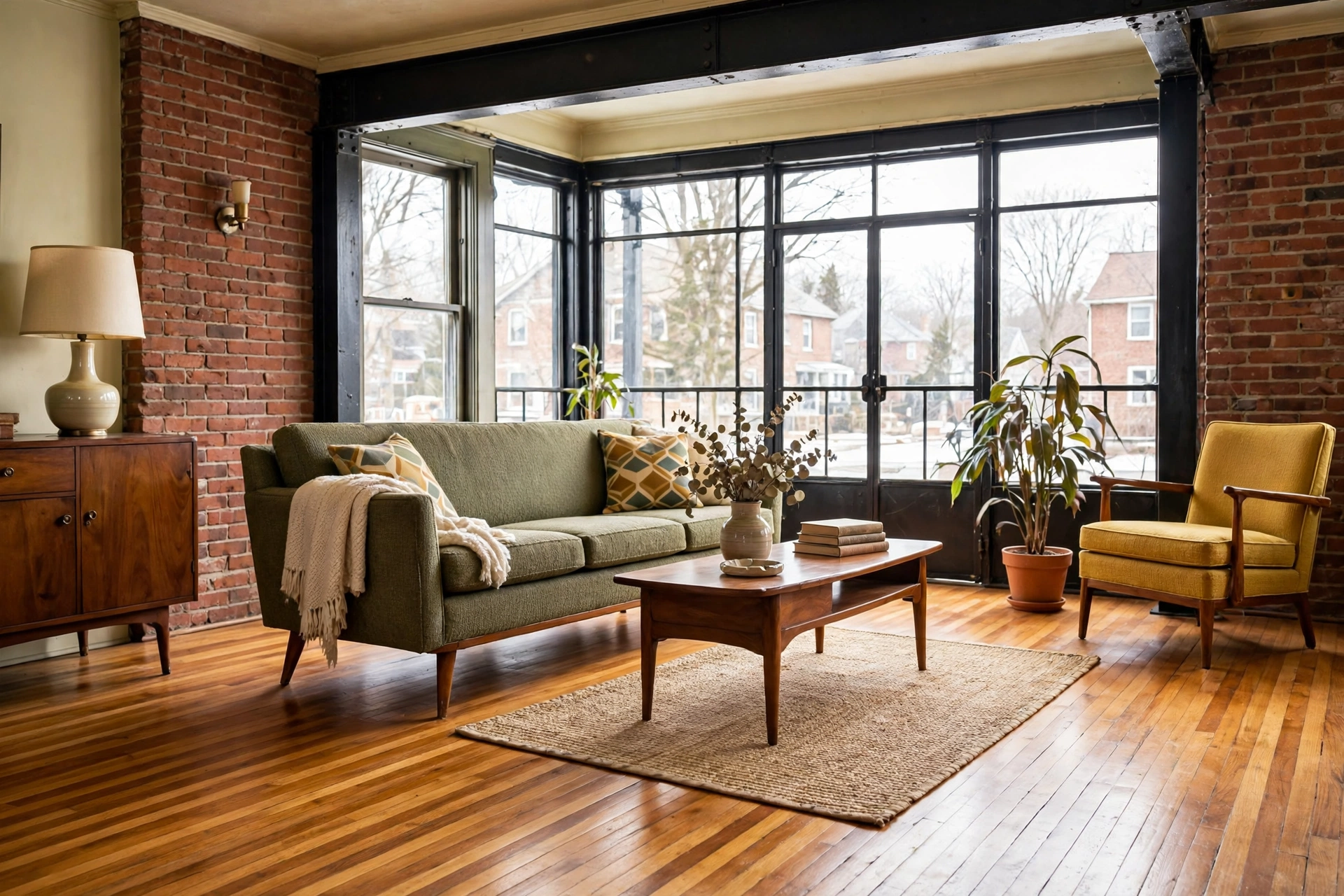


If you are thinking about new floors for a home in Sault Ste. Marie, Ontario, the first question is usually the simplest one: how much will it cost? The honest answer is that it depends — on the material you choose, the condition of what is already on your floors, and the size and shape of your rooms. This guide puts 2026 Canadian-dollar planning ranges around the four flooring services we see most often in the city: hardwood installation, hardwood refinishing, laminate and tile. Treat them as planning ranges, not quotes. Every home measures differently, and the only way to get an exact number is a free in-home quote.
A note on place first. Sault Ste. Marie sits on the Ontario side of the St. Marys River, across the water from its Michigan sister city. That northern Ontario setting shapes flooring choices more than people expect: long, dry, heated winters, grit and meltwater tracked in at entries, and a housing stock that runs from 1950s–70s steel-town homes to newer builds on the edges of town. The ranges below are written for this city, not for flooring in general.
What hardwood flooring costs in Sault Ste. Marie in 2026
Start with the headline numbers. For a straightforward job in an average-sized room, these are the 2026 planning ranges we use when homeowners in the Sault ask us to ballpark a job:
- Hardwood installation: $11–$18 per square foot, installed. That covers the material, the labour and a standard finish. Wide-plank boards, solid hardwood over engineered, and premium species push a job toward the top of the range.
- Hardwood refinishing: $6–$10 per square foot for a full sand-and-refinish. A screen-and-recoat — a light refresh for a floor whose finish is worn but whose wood is still sound — runs $3–$5 per square foot.
- Laminate flooring: $6–$11 per square foot, installed.
- Tile installation: $15–$28 per square foot, installed, for floors. Showers and backsplashes vary more, because layout, waterproofing and prep work play a bigger role.
All of these figures are in Canadian dollars and assume a fairly straightforward job. Stairs, closets, transitions, repairs and removal of the old floor sit outside the per-square-foot range and are priced on top — which is why two homes with the same square footage can still get very different quotes.
What drives the price up or down
The subfloor is the biggest unknown, especially in the Sault’s older neighbourhoods. In Steelton, Fort Creek and the East End, many homes date to the 1950s, 60s and 70s. Under the floor you see today there may be an older hardwood floor, diagonal plank subflooring, or layers of underlay and adhesive left over from earlier renovations. A subfloor that is flat, dry and solid keeps the job simple. One that is uneven, squeaky or damaged needs levelling, repair or partial replacement before the new floor goes down, and that work shows up in the quote.
What is hiding under old carpet is the classic Sault surprise. Lift the carpet in a 1960s home and you may find original hardwood worth refinishing — or underlay glued to a subfloor that needs real preparation. Either way, taking up the old floor takes time. Removal and disposal of old flooring is usually quoted separately, and the cost varies with how much there is and what it is stuck to.
Stairs and trim are where simple per-square-foot math breaks down. Stair treads, nosings, baseboards, door casings and transitions are priced per piece or per step, and they add up quickly in a two-storey home. Closets, irregular room shapes, floor vents that need to be moved or matched, and thresholds between rooms all do the same thing. When you compare quotes, check that these items are in them.
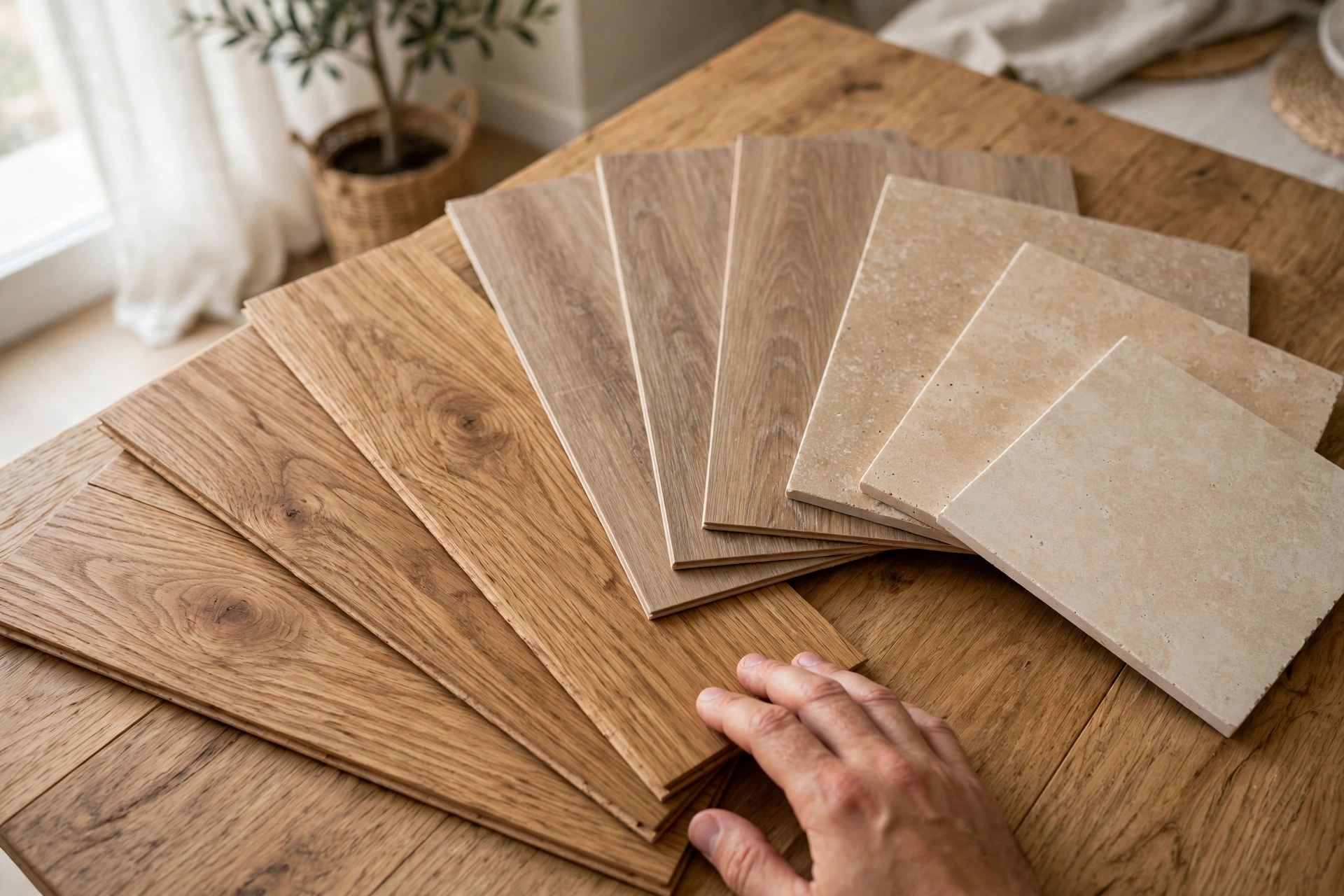
The product itself matters too. Solid hardwood and engineered hardwood sit at different price points, and wider planks and longer lengths cost more than narrow strip flooring. For laminate, thicker wear layers and better resistance to moisture cost more. For tile, large-format porcelain sits above basic ceramic, and natural stone sits higher again.
Refinish vs. replace: when keeping the old floor wins
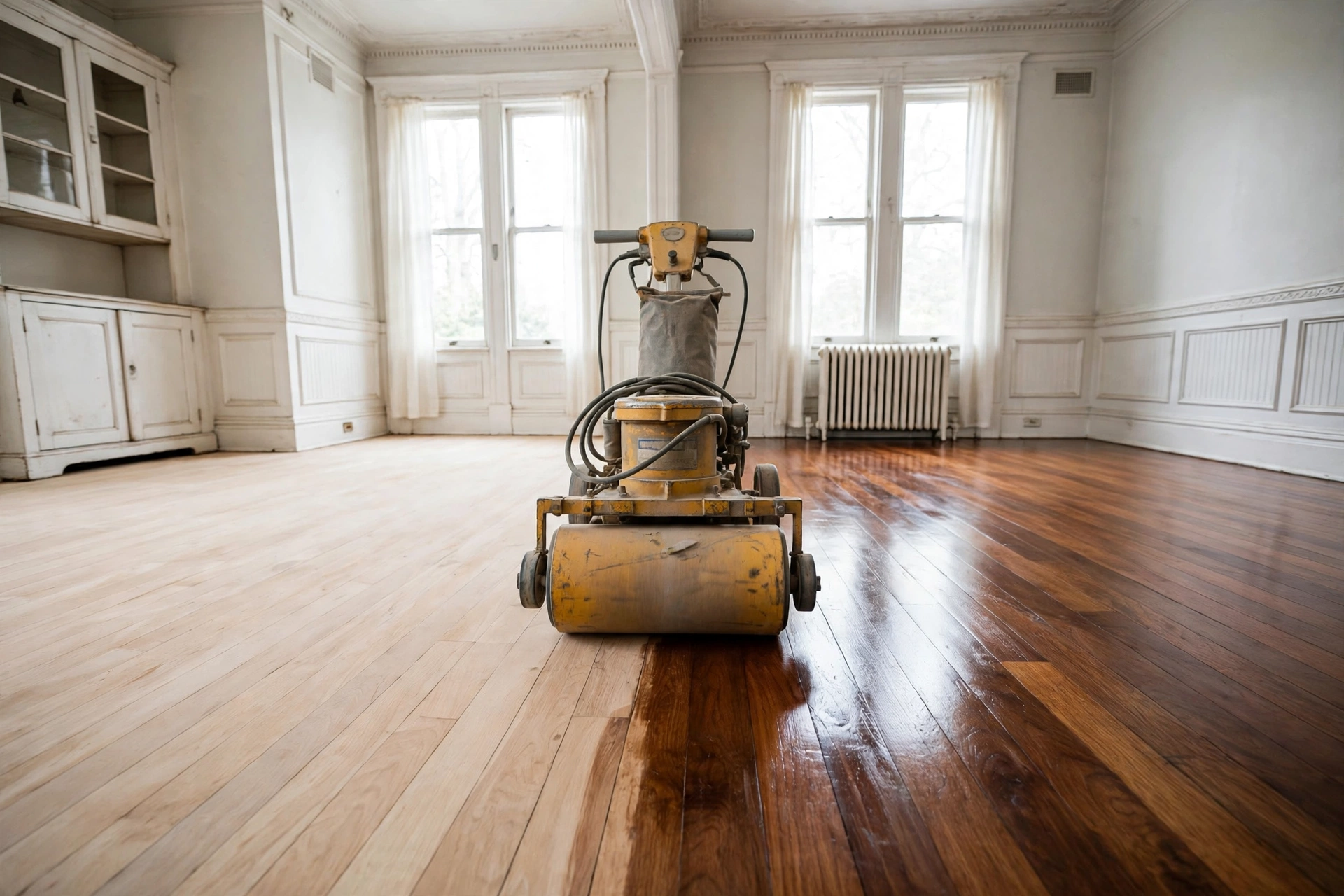
If your home already has hardwood, refinishing is usually the cheaper path — when the floor is sound. A full sand-and-refinish at $6–$10 per square foot is roughly half the cost of new installation, and a screen-and-recoat at $3–$5 is cheaper again. Refinishing makes sense when the boards are solid, flat and thick enough to sand, and when you like the layout you already have. It also keeps the floor out of the landfill.
Replacement wins when the floor is too thin to sand again, when boards are cupped, cracked or missing, when stains have gone deep into the wood, or when you want to change the direction or layout of the floor. A good quote will tell you which side of that line your floor falls on. Learn more about hardwood floor refinishing and hardwood flooring installation before you decide — and remember that a floor that can be refinished is worth keeping, because the boards in many Sault homes are hard to match with new material.
What winter does to your floors — and your budget
Sault winters are hard on floors. Months of dry, heated air pull moisture out of wood, and small gaps can open between boards in January and February. Those gaps usually close again in the more humid months, but they are one reason installers here talk about acclimatization — letting new hardwood sit in your home before it is installed — and about keeping indoor humidity steadier through the heating season. Skipping acclimatization to save a few days can cost you gaps later, so ask any quote how it handles it.
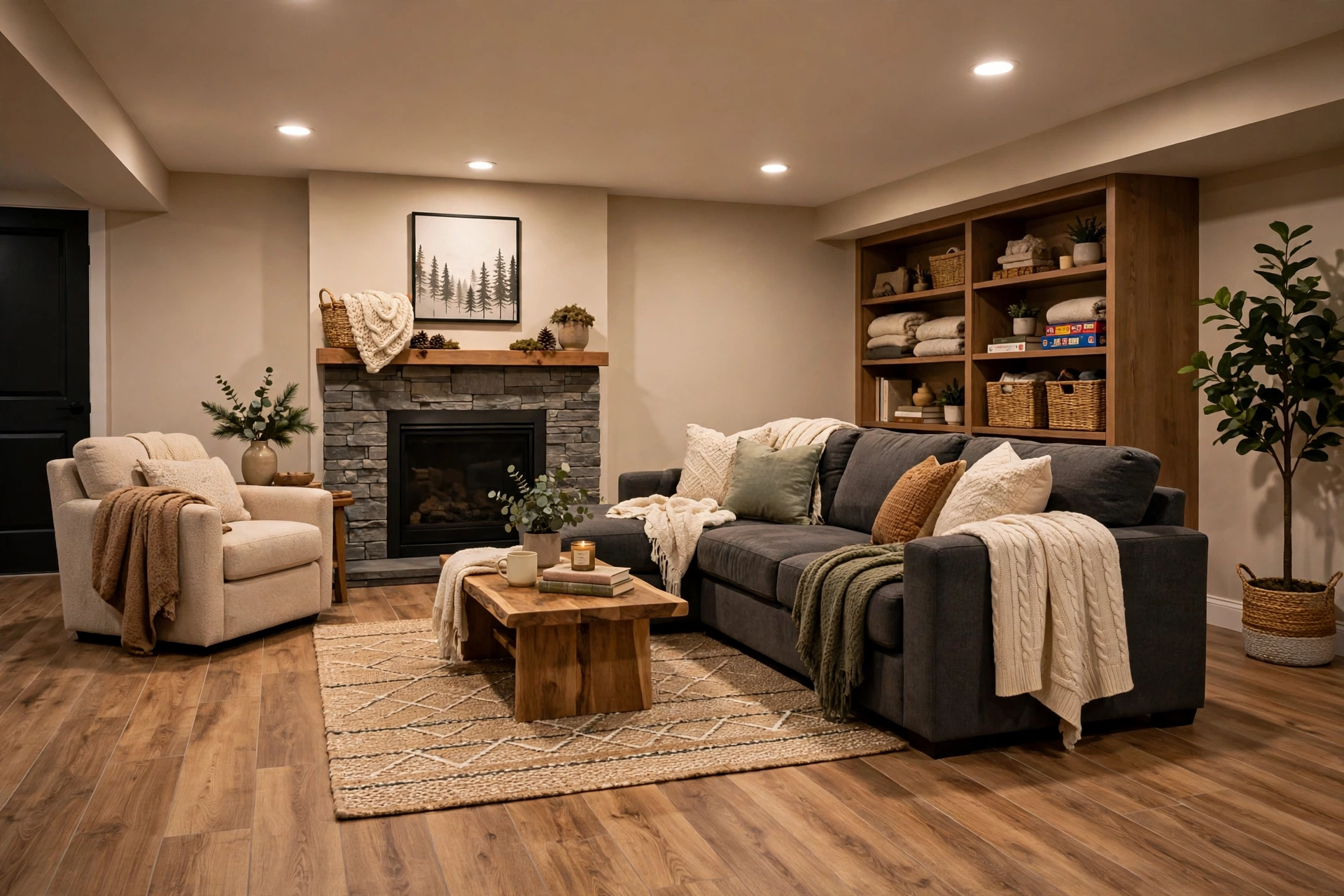
Grit and meltwater at entries are the other winter cost. Sand and salt tracked in from driveways and sidewalks scratch finishes and wear them faster, especially at front and back entries. Entry mats, boot trays and a recoat every few years on high-traffic paths are cheaper than an early refinish. Laminate’s appeal in entries and basements is exactly this: it stands up to tracked-in grit and meltwater better than a site-finished floor.
How to compare quotes
Because the ranges are wide, the way to use them is to compare quotes line by line. A complete quote should spell out what is included: removal and disposal of the old floor, subfloor preparation, the material itself, underlay or membrane where needed, installation labour, finishing (for site-finished hardwood), trim, transitions and cleanup. If one quote is much lower than the others, check what it leaves out — it is usually disposal, trim or subfloor work.
Measure the same way, too. Quotes are normally priced on the measured area plus a cutting allowance for waste, so a quote based on a rough room size will move when the rooms are actually measured. And ask about timing: acclimatization, finish curing and the number of days the crew will be in your home all affect both the schedule and, sometimes, the price. A quote that explains its assumptions is worth more than a lower number that explains nothing.
One more question worth asking: is the quote fixed, or an estimate that can move? A fixed quote for a job with unknown subfloor conditions is rare, and a reputable quote will say what happens if the crew finds damage once the old floor is up — usually a per-square-foot or per-sheet rate for subfloor repair, agreed in advance. That way there are no surprises mid-job, and you can compare the allowance each company makes for the unknown.
Get a free quote
The ranges in this guide will get your planning started, but the number that matters is the one for your home. Call (249) 700-4998 for a free quote. We will measure your rooms, look at what is under your existing floor, and give you a written price for the work, with no obligation.